Regulatory precedent
FDA approved DFMO (IWILFIN) in December 2023, the first oncology drug acting on the polyamine pathway.
FDA label →
Aminex targets a metabolic dependence of cancer cells, one of the established hallmarks of cancer: their reliance on polyamines for growth and immune evasion.
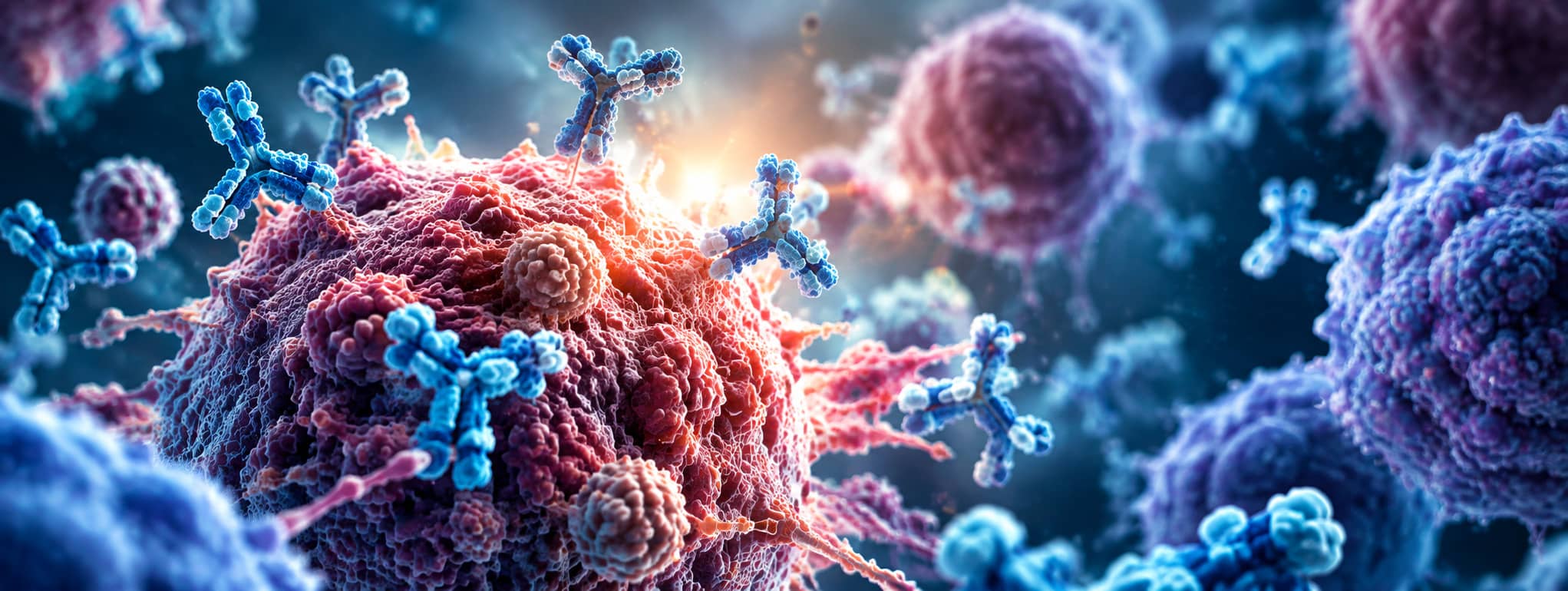
Cancer cells make polyamines internally through the ODC enzyme.
When synthesis is blocked, tumors import polyamines from the bloodstream.
High polyamine levels create an immunosuppressive tumor microenvironment.
DFMO blocks internal production; AMXT 1501 blocks external uptake, including through the ATP13A3 transporter. Depleting both releases the immune brake.
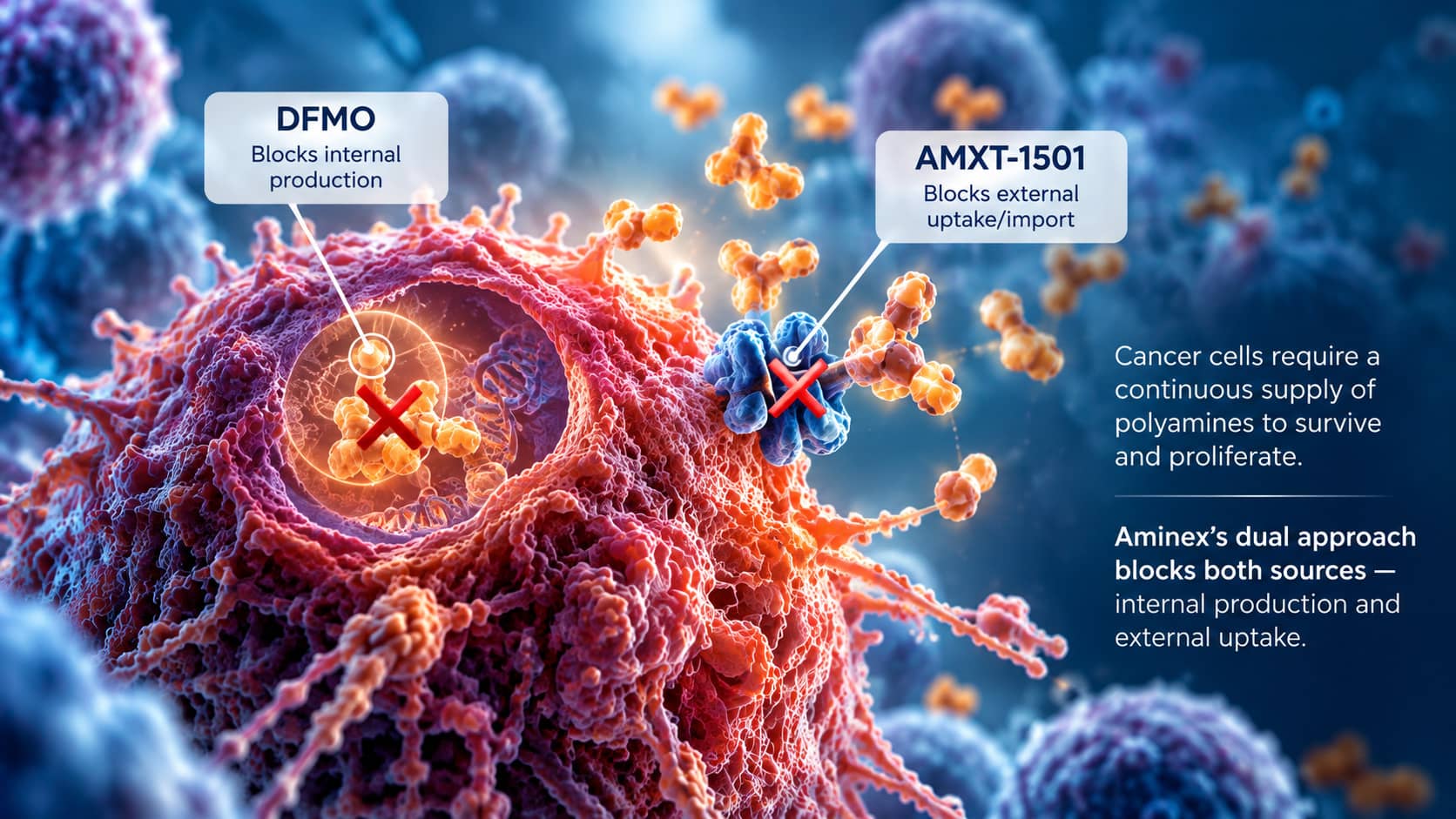
Immune effects (about 10-fold fewer MDSCs; CD3/CD8 T-cell influx) shown in preclinical models; CD3/CD8 increase also observed in a Phase I melanoma biopsy. Sources: Piha-Paul et al. (2025) ; earlier preclinical references pending confirmation.
FDA approved DFMO (IWILFIN) in December 2023, the first oncology drug acting on the polyamine pathway.
FDA label →In 2025, KU Leuven and Children's Cancer Institute researchers showed ATP13A3 drives DFMO-induced uptake, and that AMXT 1501 inhibits it.
Read publication →Penn State and the Beat Childhood Cancer Consortium sponsor and fund a pediatric Phase 1/2 trial of the combination.
Trial record →